Restoration
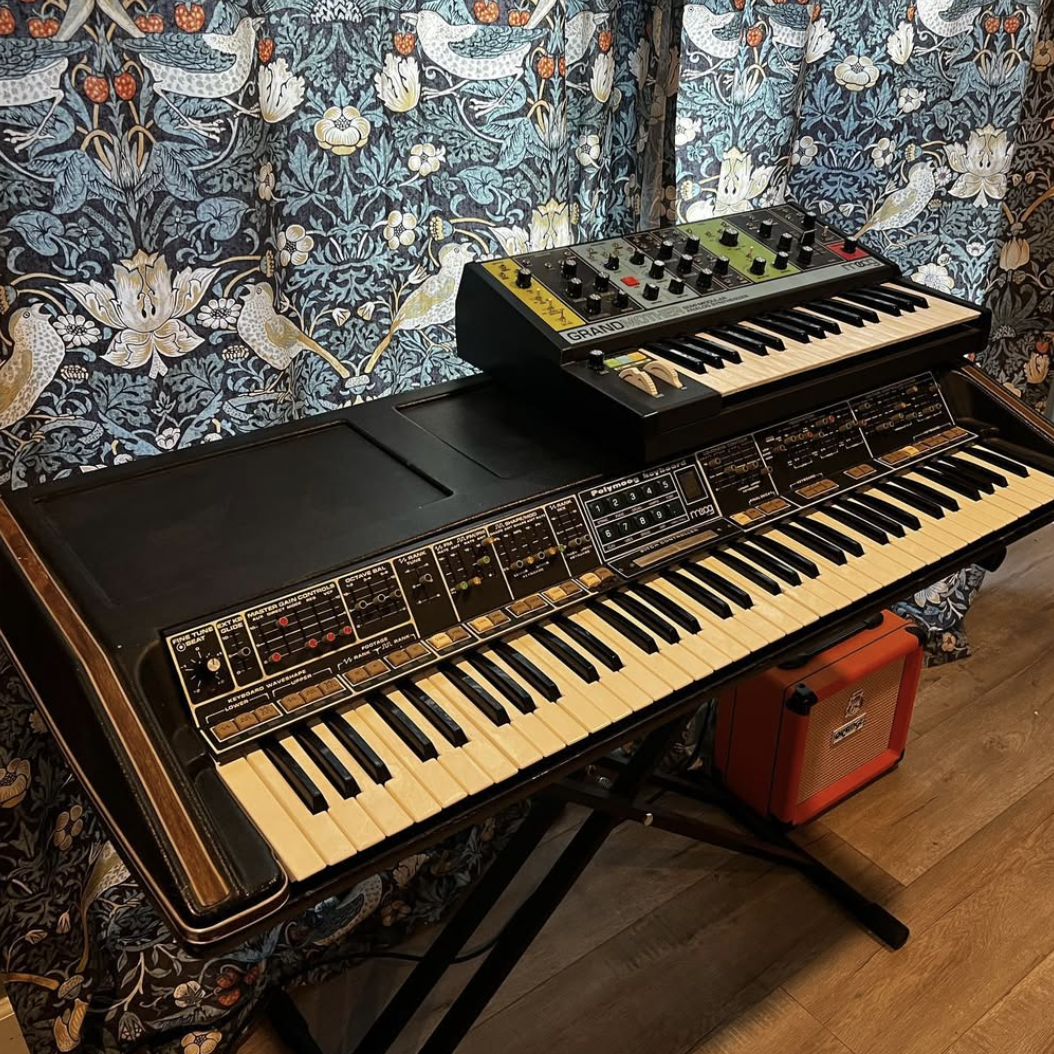
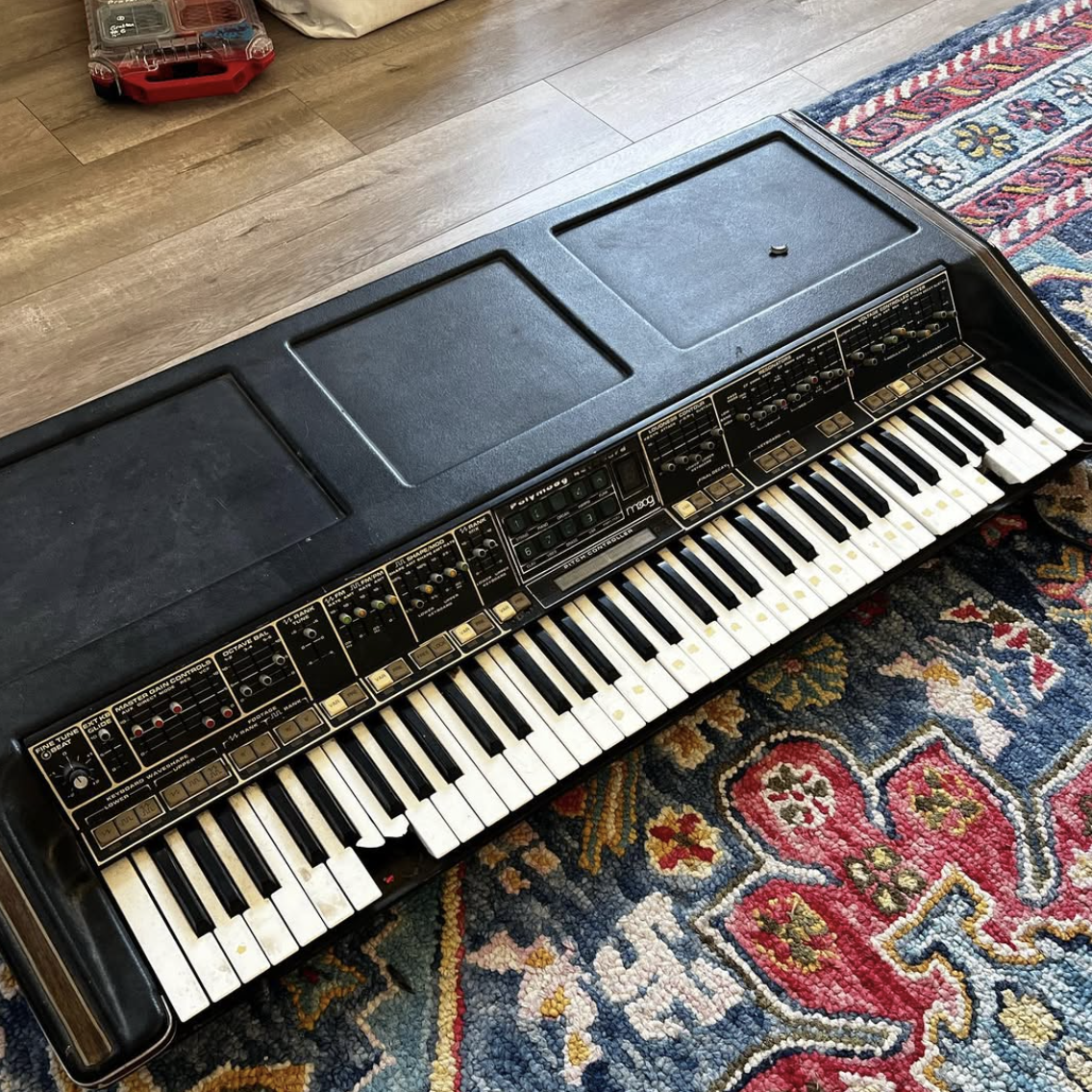
This is a rescue story without conventional format that I use on other project pages. I was trolling Facebook Marketplace with no money to spend, and saw Moog Polymoog 203A for parts of repair. Which was unbelievable to me. I offered to trade for the synth, my repaired Yamaha CS-15D, and Fender Rhodes keyboards for it. When the seller accepted, I drove down to San Diego to pick it up and back the same day.
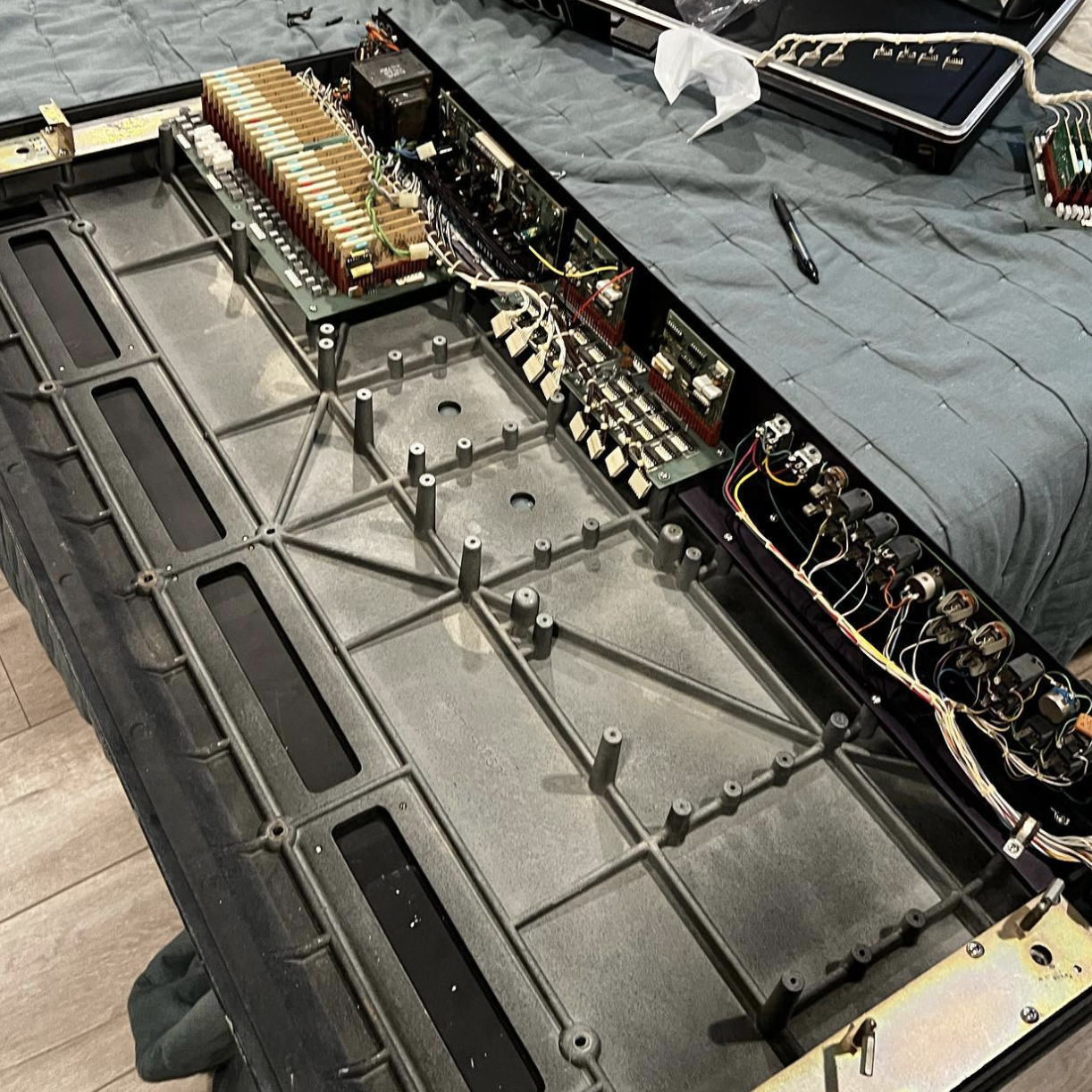
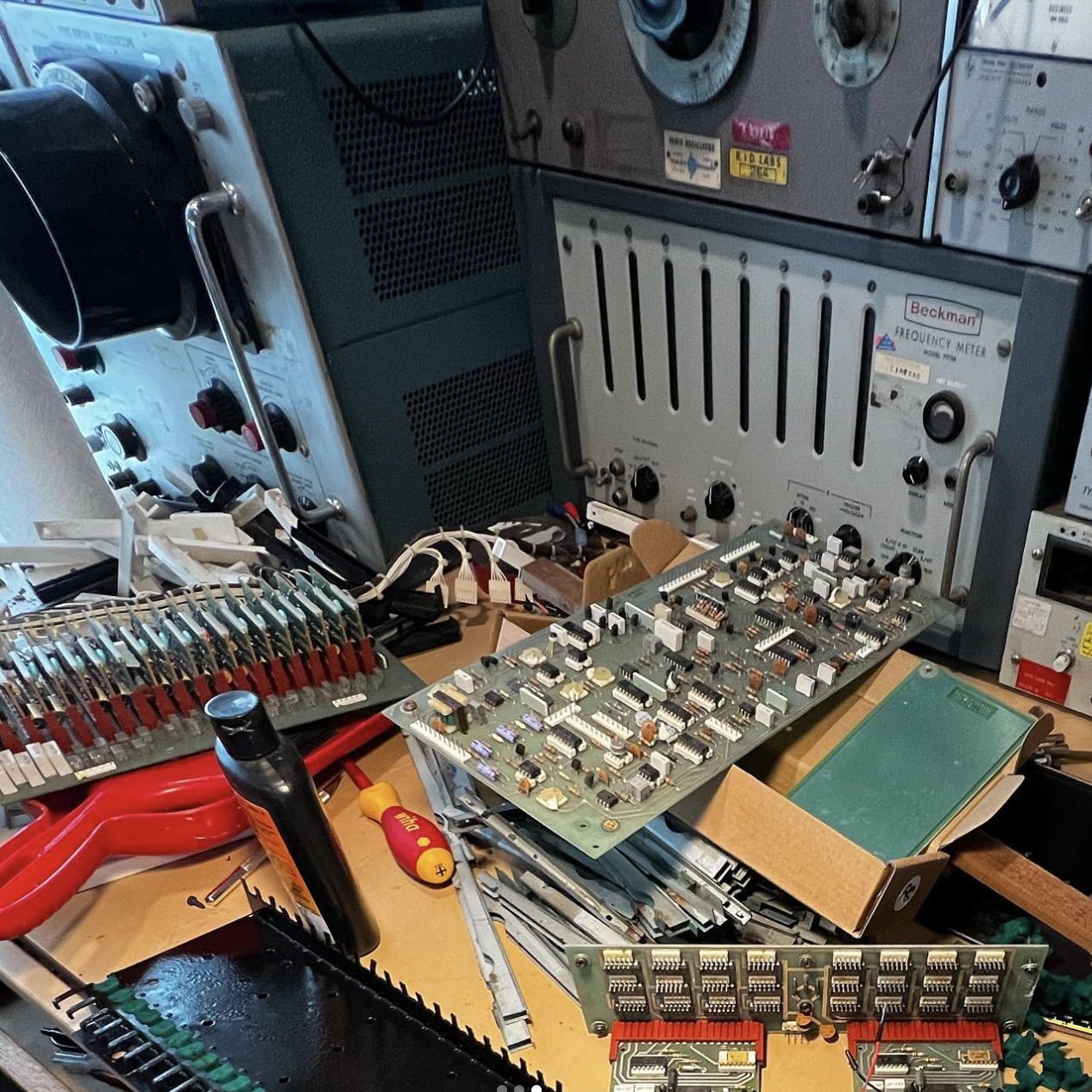
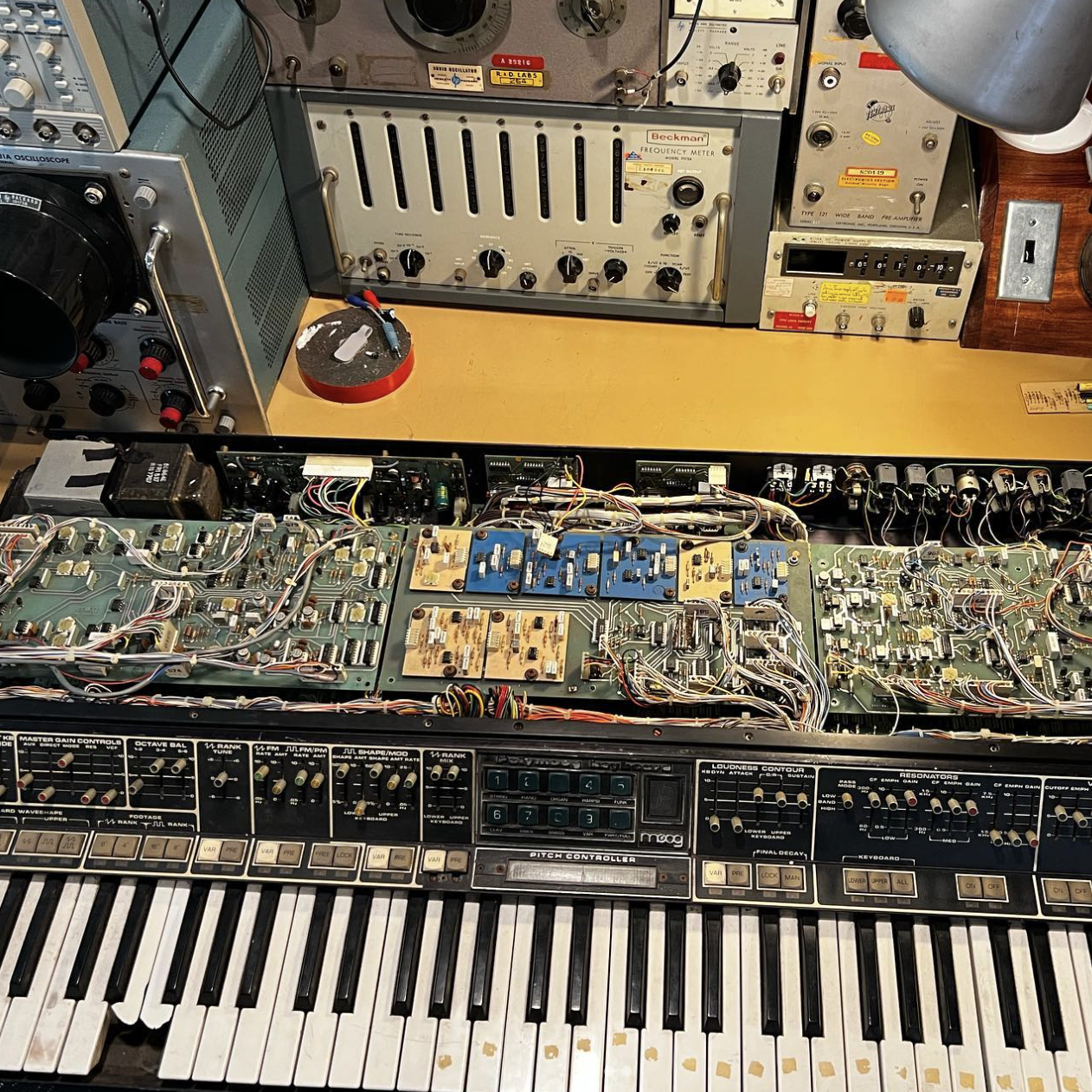
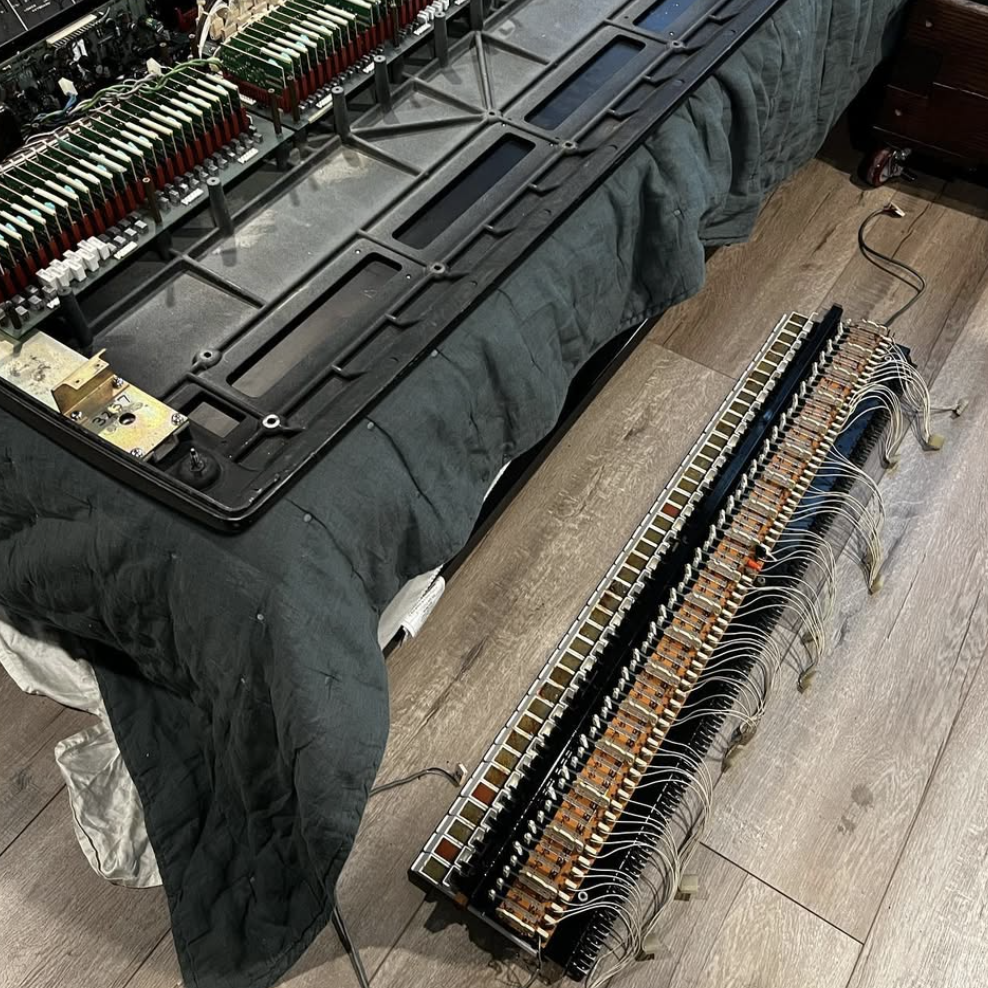
I began to disassemble and document the circuits and look for defects, I started to learn about the Polymoog's reputation and design flaws. This is a beautiful, very delicate and very over-engineered synthesizer. Many of the problems it had when I bought it were purely bad electrolytic and tantalum caps, which I replaced. I could then set my supply voltages and avoid damaging anything, the power transistors were fine, and providing nice clean power so I plugged everything in internally. The single biggest problem with the synth was some sort of corrosive environment, which had damaged some connectors inside I had to replace, but mainly it was the nearly non-functionl keybed which I had to completely redo with fresh bushings and lube and I had to scrape decades of rust out of it. After replacing the bad keys and cleaning the central contact bars it was back in business. The next problem was the scattered bad polycom chip cards, which are a known impasse with this synth, when they go they go. I decided to group all the bad cards down at the far end of the keybed in the bass section I usually stay away from anyway.
The only other outstanding issue after following this procedure to regain faulty notes was the preset selector. The seven segment driver was bad and needed replacement. But additionally there were two bad buffers used for preset selection I had to replace. This was big for me because this was the first really opaque active component in a restoration that I had to learn how to diagnose and safely replace. After this though the synth was more or less back in business! I completed the cosmetic restoration and lubed the sliding potentiometers with deoxit for better control of the various parameters.
My eventual goal is to release a replacement polycom card that uses off the shelf componets to replace the synth-on-chip functionality of the now obsolete Polycom chip. More updates to follow!