Intro
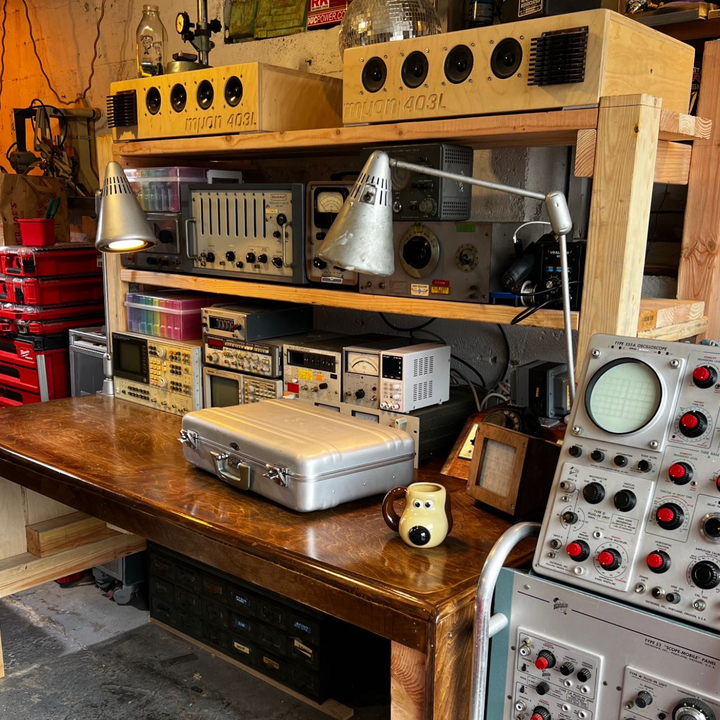
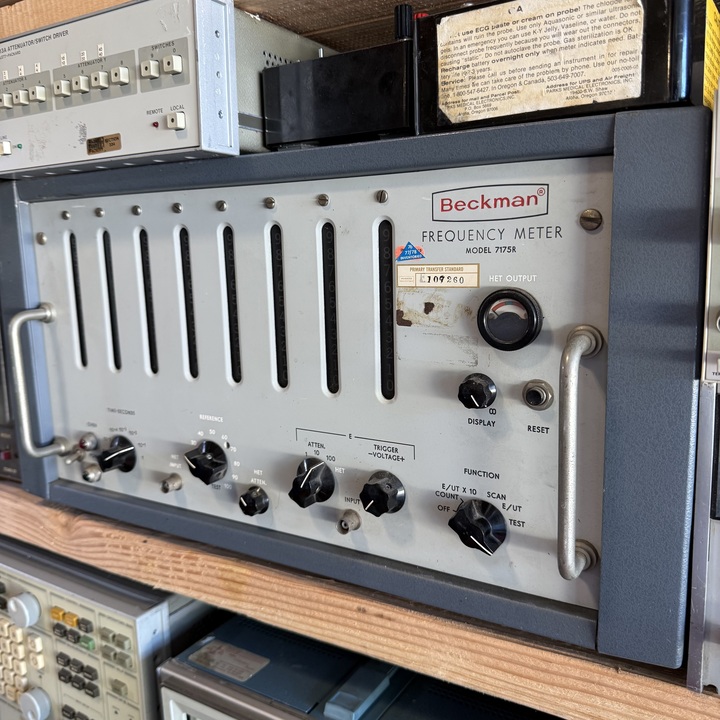
I have always been fascinated with scientific equipment, and started collecting it when it was cheap long before I knew how to use any of it. Now I see a lot of this old and still functional gear as an essential resource for my various projects when I need the hard to acquire equipment. Since most of this stuff was so expensive when it was new, almost all of these pieces have an interesting provenance back in their day.
Neat Stuff About this Collection
My first real step toward a collection of test equipment happened when I went to investigate an interesting Facebook marketplace ad, this turned out to be a warehouse clearing and estate sale. The previous owner had spent the past 50 years collecting all of the surplus equipment from his next door neighbor, who turned out to be the Howard Hughes Aviation. This collection was being sold by the new owner, who didn't care about electronic equipment and just asked for a fair price on stuff, wanting me to tell him what it was as I took it. This collection is still the craziest thing I have ever seen. I took what I could, and it just about ran me broke at the time. There were vacuum tube main frame computers, tape memory machines, seismographs, endless vacuum tubes, oscilloscopes, inspection rigs, blueprints, and altec speaker systems. Many pieces had tags from specific projects, such as computers used for satellite communication.
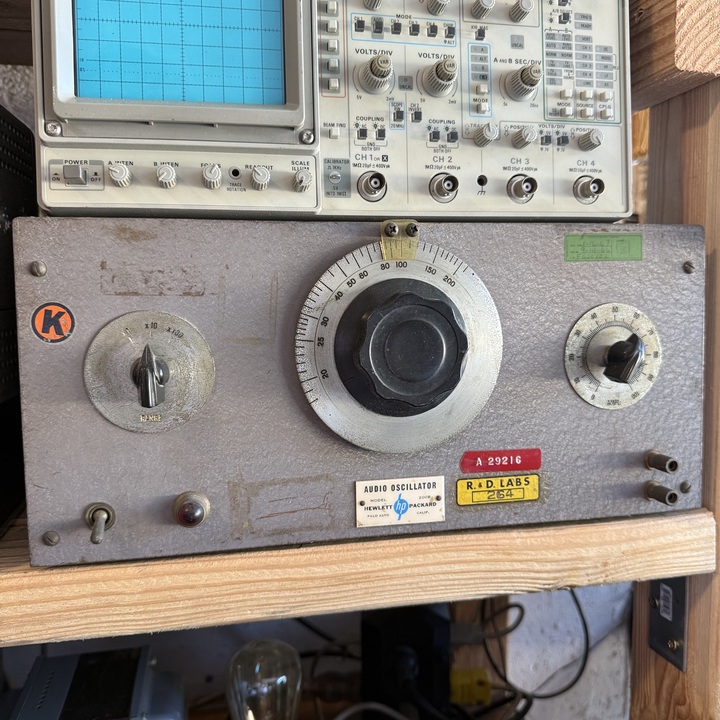
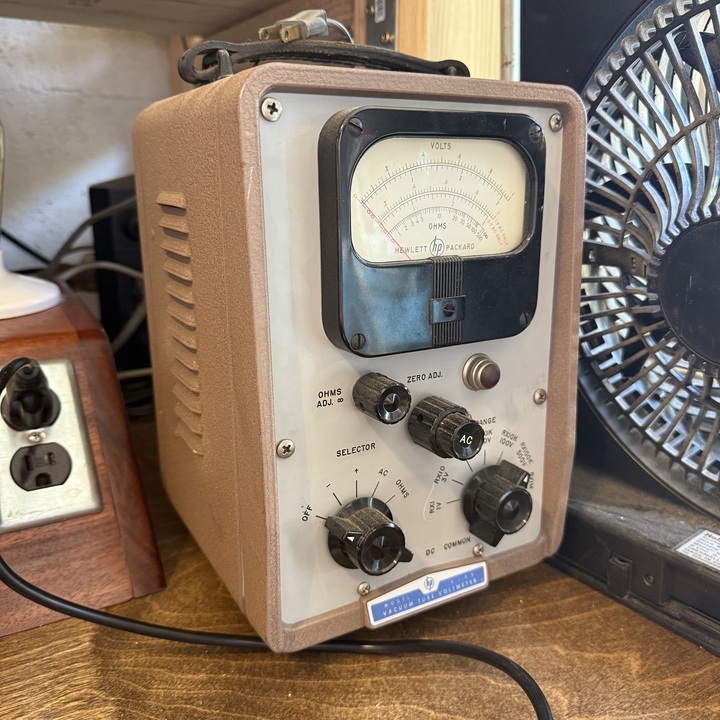
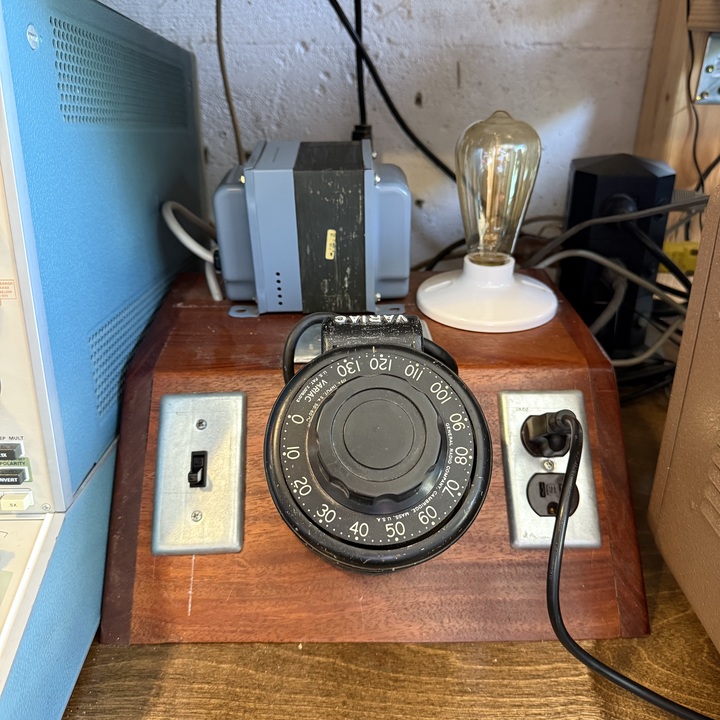
I ended up with a Tektronix vacuum tube oscilloscope, HP VTVM, HP frequency generators, gage blocks, audio amplifiers and power supplies, tons of transformers and documentation. Detailed below. This windfall forced me to learn about how all this equipment works as I started to repair more and more of it. Now I have a bench of all vintage equipment, many pieces still decorated with the inventory tags from Hughes and their various departmental stickers.

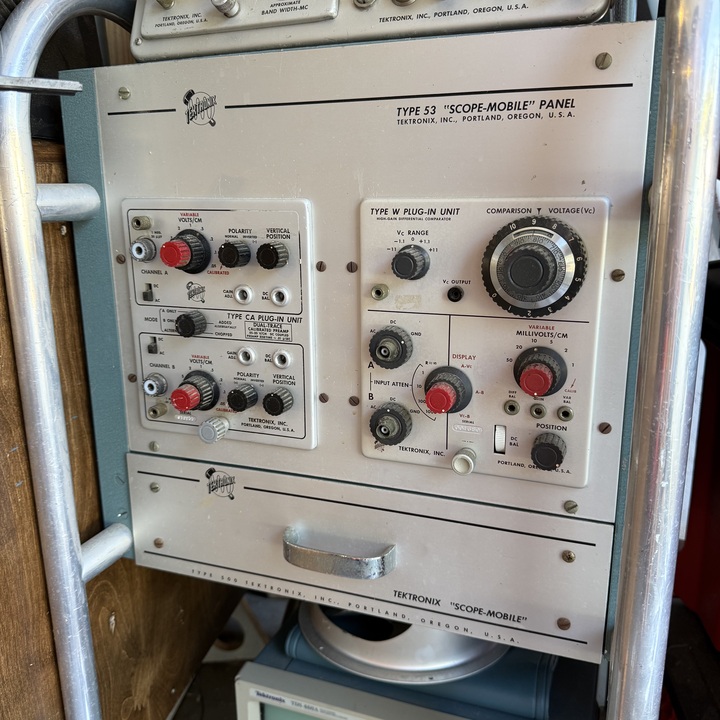
Tektronix 535a with cart
This cart and scope was purchased for a combined price of around $100 from someone who hadn't tested it and found everything in a storage unit. I cleaned the scope and cart and got both back in good cosmetic shape, the scope worked with very little repair work, a few mica caps were bad and needed to be replaced.
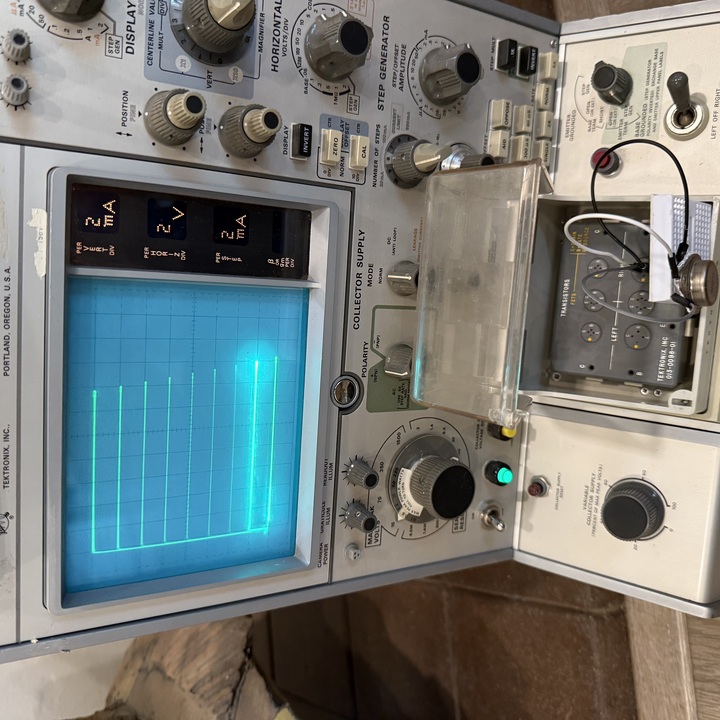
Tektronix 576
This unit required almost no restoration. I bought it as a small part of a giant lot of equipment, I sold everything but the 576 and a few nice pieces of gear, and ended up paying less for the lot than if I were to buy the 576 on its own. It works great, and was instrumental in restoring my Altec 9440a amplifier, testing the 30 transistors that were deemed 'leaky' by a geriatric repair shop.
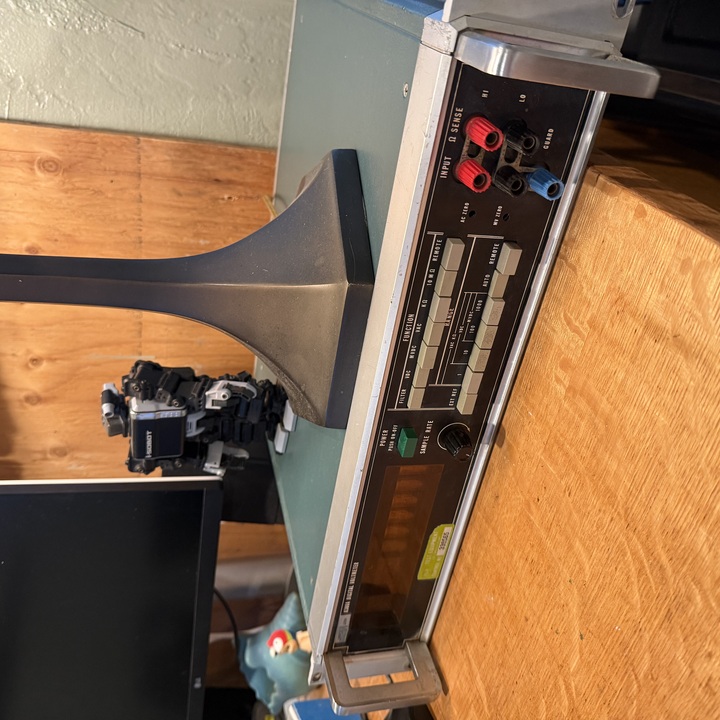
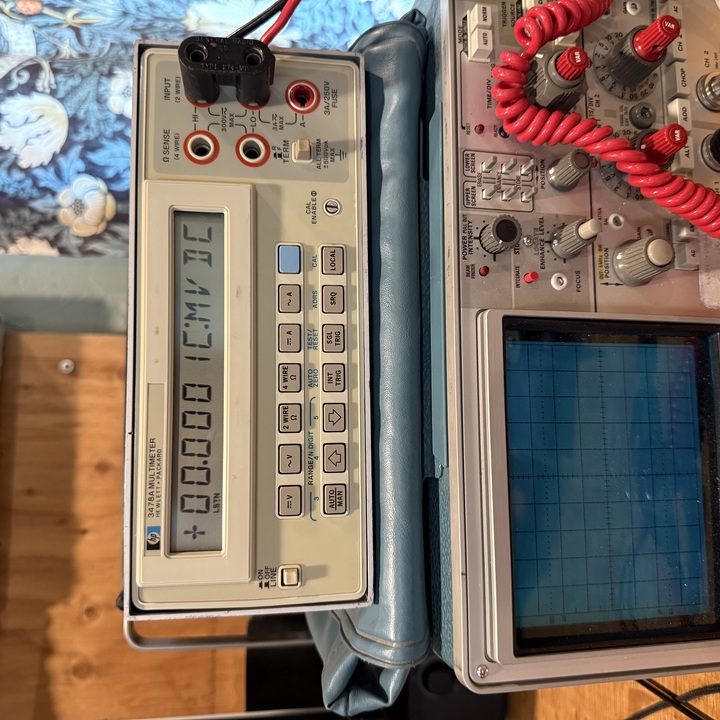
Fluke 8300a
This was purchased from Apex Electronics in Sun Valley, and restored. I removed the Wurlitzer 3 pin power connector and swapped it for a standard IEC plug.